Biosecurity alert
Foot-and-mouth disease (FMD) is present in Indonesia and African swine fever (ASF) is established in Asia and parts of Europe. An outbreak of FMD or ASF would have severe consequences for Australia’s animal health, trade and economy, and our regional communities.
You can help protect our livestock from FMD and ASF by following the prohibited pig feed regulations.
- Do not feed meat, meat products or food that has been in contact with meat to pigs.
- Do not allow anyone else to feed your pigs except with safe pig feed.
- Do not supply food or food waste that contains meat or has been in contact with meat to people who intend to feed it to pigs.
Always report any illegal feeding of pigs or unusual signs of illness or unexplained deaths in pigs (including feral pigs) to:
- livestockbiosecurity@dpird.wa.gov.au
- Emergency Animal Disease hotline: 1800 675 888
Early detection increases our chances of eradicating FMD and ASF if they occur.
Australia is fortunate to be free of many serious diseases that could affect livestock health and our export trade.
Devastating viruses such as foot-and-mouth disease (FMD) and African Swine Fever (ASF) can survive for long periods in meat and meat products. Feeding pigs food that contains meat or has been in contact with meat (known as swill or prohibited pig feed) is the most likely way these diseases could be introduced into Australia.
Overseas outbreaks caused by prohibited pig feed
The foot-and-mouth disease outbreak in the United Kingdom in 2001 is believed to have started when pigs were fed waste containing illegally imported meat products carrying foot-and-mouth disease.
The recent spread of African swine fever throughout Russia, Europe, and parts of Asia is believed to have been caused by pigs accessing food waste.
Australia has strict quarantine and biosecurity measures to prevent the importation of animal products from countries where these diseases are known to occur, but there is still the risk that infected products may reach Australia. This is why it is vital not to feed prohibited pig feed to pigs.
Prohibited pig feed (also known as swill) is food that contains meat, meat products, or has been in contact with mammalian matter such as beef, pork, lamb or goat.
Examples of prohibited pig feed
It is illegal to feed to pigs:
- meat, meat scraps, or trimmings from mammals
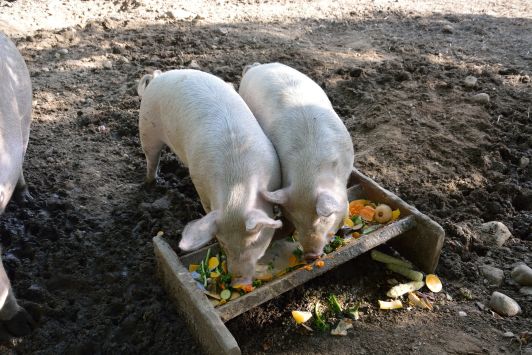
- fruit and vegetable waste that has been in contact with meat
- bakery waste contaminated by meat (e.g. cheese and bacon rolls)
- offal, blood, bones, or mammal carcasses
- non‑Australian dairy products unless legally imported for livestock feed
- used cooking oil unless treated to the required standard.
Where is prohibited pig feed commonly found?
Prohibited pig feed may be found in:
- kitchens and households
- food processors and manufacturers
- food retailers, including supermarkets and bakeries
- hotels, restaurants, cafés, fast food outlets, delicatessens and lunch bars
- rubbish dumps
If you’re unsure, don’t feed it to pigs or supply it to anyone who intends to feed it to pigs.
The safest option for feeding pigs is commercially manufactured pig feed or pellets.
Safe feed includes:
- commercial pig feed or pellets
- grains, fruit and vegetables that have not been in contact with meat
- Australian milk and dairy products (or legally imported dairy products for stockfeed use)
- commercial meat meals and tallow produced in line with AS 5008:2007
- used cooking oil that:
- has been processed to national animal feed standards, and
- has only been used in Australia.
Your responsibilities
Pig owners must:
- not feed prohibited pig feed to pigs
- prevent pigs from accessing prohibited pig feed
- dispose of food waste that contains meat in a way that pigs cannot access it.
Pig owners should:
- check feed labels to ensure it does not contain prohibited pig feed
- obtain a vendor declaration from their feed supplier or feed ingredient supplier that provides evidence the feed meets regulatory requirements for pigs.
Food businesses must:
- not supply food waste containing meat to anyone who plans to feed it to pigs
- ensure bins used for food waste containing meat cannot be accessed by pigs (including feral pigs)
- use authorised waste collection services.
Businesses that knowingly supply prohibited pig food for pigs can be prosecuted.
Environmental Health Officers play a critical role in preventing illegal feeding of pigs by:
- educating food businesses about prohibited pig feed laws
- advising on proper waste disposal
- ensuring businesses use authorised waste collection services
- reporting suspected illegal feeding of pigs to the Department of Primary Industries and Regional Development (DPIRD).
Camping and feral pigs
When camping, working on the land or out enjoying nature, put all leftover food in a secure bin or take it home.
Feral pigs eating your leftover food could introduce foot-and-mouth disease or African swine fever to Australia’s livestock and devastate our regional communities.
Report disease signs or suspected illegal feeding
Report illegal feeding of pigs, unusual signs of illness or unexplained deaths in pigs (including feral pigs) to:
- livestockbiosecurity@dpird.wa.gov.au
- Emergency Animal Disease Hotline: 1800 675 888
Penalties
Under the Biosecurity and Agriculture Management (Agriculture Standards) Regulations 2013, people may be fined up to $5,000 for:
- feeding prohibited pig feed to pigs
- allowing pigs to access prohibited pig feed
- collecting and storing prohibited pig feed for feeding to pigs
- supplying prohibited pig feed for feeding to pigs.
Resources
- Don't let feral pigs meet with meat (2.17 MB)pdf
- It is illegal to feed food scraps to pigs (1.41 MB)pdf
- It is illegal to feed food scraps to pigs - Chinese (442 KB)pdf
- It is illegal to feed food scraps to pigs - Italian (402 KB)pdf
- It is illegal to feed food scraps to pigs - Vietnamese (441 KB)pdf
- Prohibited pig feed information for Environmental Health Officers (564 KB)pdf
- What can pigs eat? (1.19 MB)pdf
- Keep your food away from feral pigs (4.4 MB)pdf
- Are you selling or giving away food waste for pigs? (2.75 MB)pdf
Related links
Contact us
-
Livestock biosecurity
-
24/7 Emergency Animal Disease Hotline