
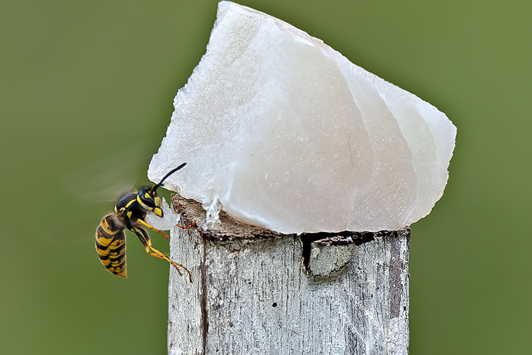
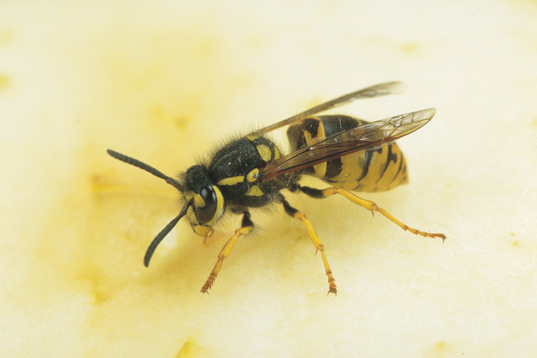
Report European wasps
Favourable environmental conditions and a lack of natural predators mean the European wasp has the potential to become a greater pest in Western Australia (WA) than elsewhere in the world. Each year, fertilised wasp queens arrive in WA via freight and cargo mostly from the eastern states where the wasps are well established.
Early detection of wasp activity is critical to prevent the wasps from establishing in WA. The community play a key role in assisting with the early detection and reporting of European wasps.
How to identify European wasps
Report suspected European wasp detections to the department by contacting our Pest and Disease Information Service (PaDIS) on +08 9368 3080 or email padis@dpird.wa.gov.au or use the MyPestGuide Reporter app.
DPIRD has successfully prevented the European wasp from establishing a permanent population in Western Australia (WA) since 1977. The department has developed a plan of activities to be undertaken over the next 5 years to continue to control incursions and maintain WA’s European wasp free status.
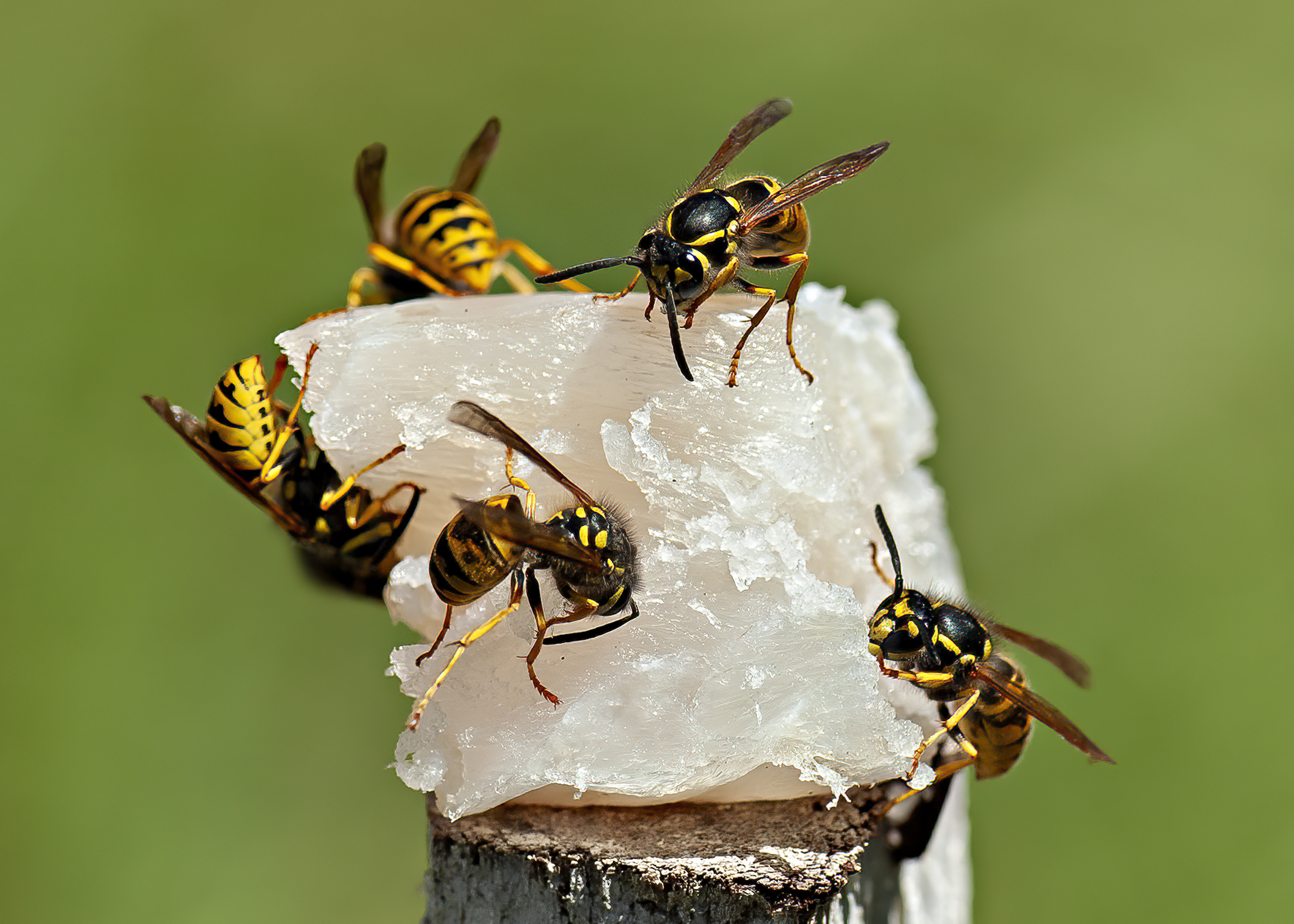
Potential impacts of the European wasp
- Safety risk to outdoor activities, such as maintenance and field work, gardening, bushwalking, picnicking, and orchard work due to their foraging habits and aggressive behaviour.
- Underground nests are difficult to see, and disturbing a nest can lead to thousands of painful or dangerous wasp stings.
- Compete with and predate on native insects (particularly pollinating insects), reducing biodiversity, and ecosystem function.
- Forage for human food and drink, and pet food, causing a nuisance and health concern.
- Damage horticulture and viticulture crops, like grapes and stone fruits.
- Predate on bees in managed apiaries, impacting industry and home gardeners.
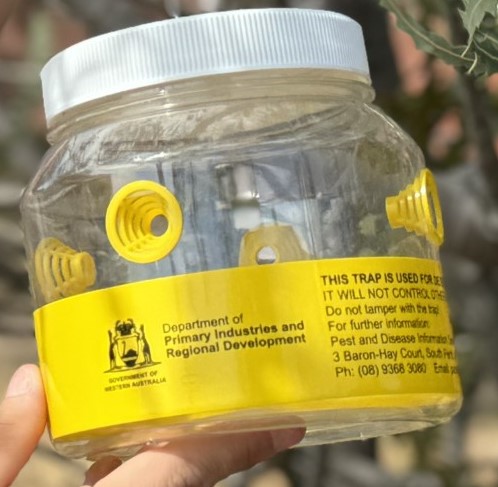
Adopt-a-trap to help fight European wasps
Community members, businesses (particularly in industrial areas), and local governments are invited to Adopt-a-trap to monitor European wasps during the active wasp season, in the warmer months from around December through to the end of May.
Early detection of European wasps is vital to prevent the establishment and spread of nests. Help us maximise surveillance and keep your community, lifestyle, and business safe by participating in our Adopt-a-trap program.
The method used in the program is very successful in catching European wasps by addressing the wasps’ sense of smell and foraging habits to find food.
Trapped wasps alert us to the presence of a nearby nest and help us detect and destroy the nest.
To Adopt-a-trap, sign up online at dpird.wa.gov.au or call our Pest and Disease Information Service (PaDIS) on +61 8 9368 3080 or email padis@dpird.wa.gov.au.
More information
The European wasp has distinct behaviours among wasp species and other insects in WA, which make it easy to identify. Look for the following identification features and behaviours:
- wasps feeding on meat, fruit, human food and drinks, pet food, insects, or dead animals
- wasps flying in and out of a single hole in the ground — 90% of nests are hidden underground
- wasps flying with raised legs — all other wasps and bees dangle their legs in flight
- wasps with black antennae — similar paper wasps have orange-yellow antennae.
Because of their yellow and black stripes, several wasps, bees, and flies can be mistaken for European wasps.
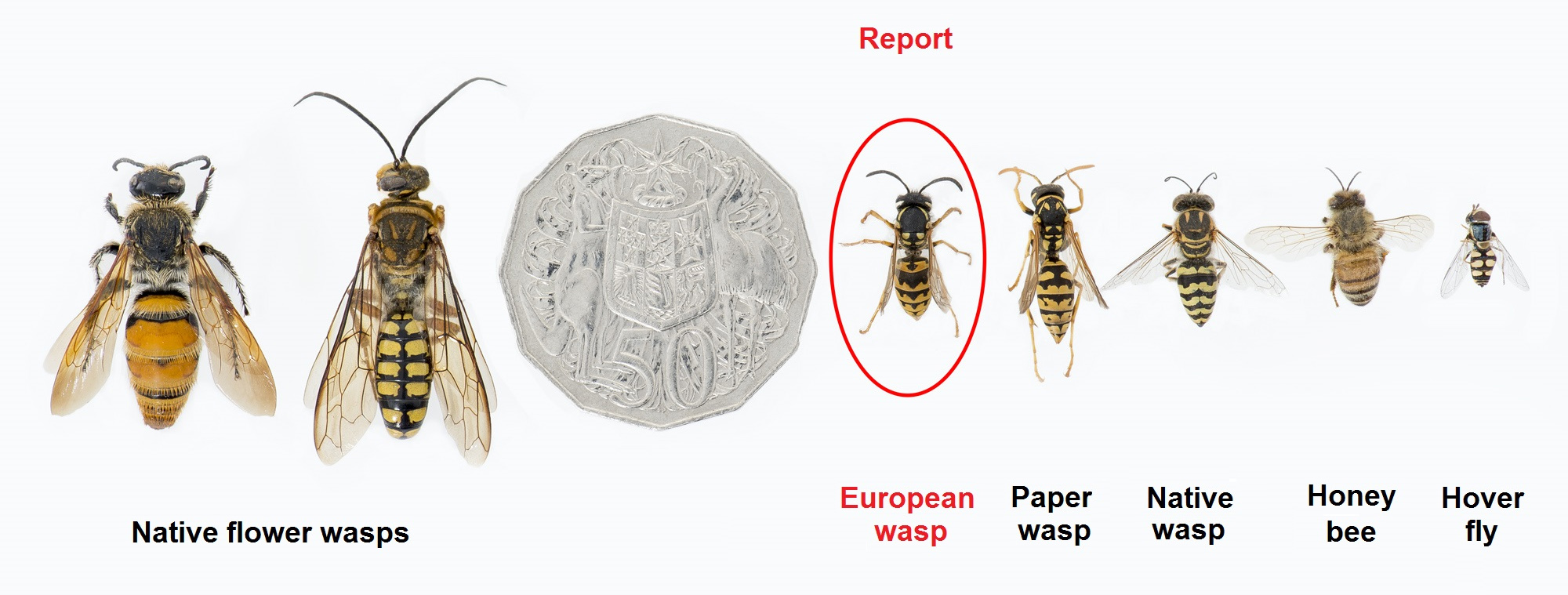
Similar insects
Native flower wasps (Tiphiidae and Scoliidae families) are much larger. These harmless solitary wasps only come together during the mating season and are beneficial pollinators.
Yellow paper wasps are bright yellow and black, slightly longer and thinner (more wasp-like), with orange-brown antennae. Unlike European wasps, paper wasps hover with their back legs hanging down.
Honeybees are a similar size to European wasps, but have black legs, a hairy body, and dull brown-orange colour, as opposed to the bright yellow and black of European wasps.
Native Bembix wasps have shorter, thinner antennae, and larger eyes. Many Bembix species have yellow-green eyes and a lime green-yellow body colour.
Hover flies are smaller than European wasps and hover when flying. Their antennae are short and stubby, and their large eyes meet. They have one pair of obvious wings, as opposed to the two pairs of wings (a large and short pair) on European wasps.
European wasp or yellow paper wasp
Yellow paper wasps are easy to confuse with European wasps — they are common and widespread in WA, and frequently nest in eaves, under fence capping, or attached to bushes.
Paper wasps often visit plants and water sources and hover over lawns. Look for their distinctive papery honeycomb nest or note the colour of the antennae and position of the legs when they fly.
|
Feature |
European wasp |
Paper wasps |
|
Size |
Workers: about 15 mm long (bee size) |
15-19 mm long (longer than a bee) |
|
Body shape |
Stout, like a bee |
Longer and thinner than a bee. Narrow waist |
|
Colour |
Bright yellow and black |
|
|
Antennae |
All black |
Yellow-orange |
|
Flying |
Legs held close to body during flight. Fly very quickly, generally do not hover |
Back legs dangle down during flight. Often seen hovering around bushes, over lawns and around water sources |
|
Food |
European wasps are scavengers, feeding from pet food, meat or vegetable scraps, meat products, fish, or dead insects |
Paper wasps feed on insects including caterpillars, flies, beetle larvae, and nectar |
Nests
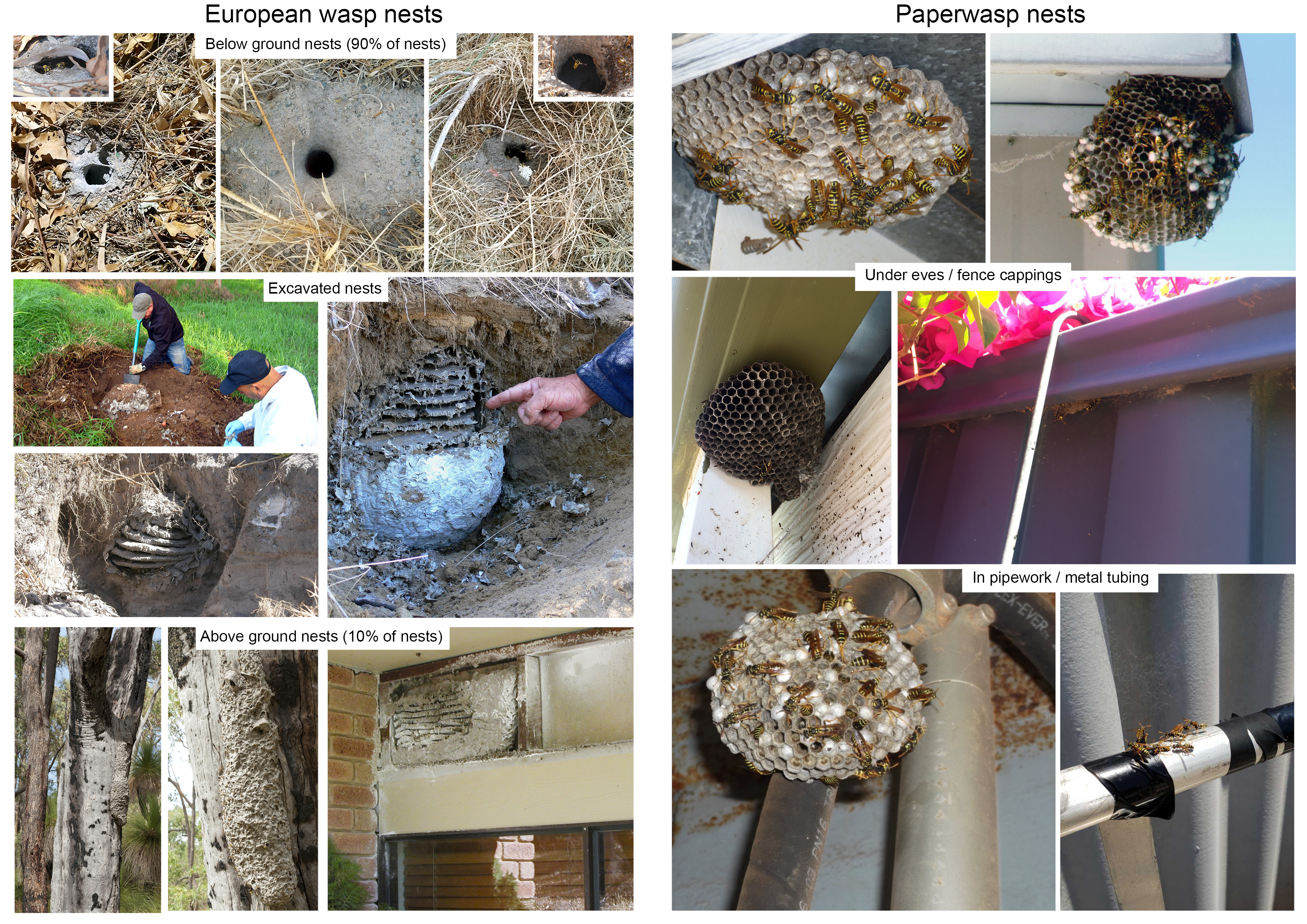
European wasp nests are usually built in the ground but may be found in tree hollows, walls, machinery, and more.
|
|
European wasp nest |
Paper wasp nest |
|
Nest |
Rarely seen |
Often seen (usually above ground) |
|
Location |
Usually below ground, with the entrance appearing as a hole in the ground On rare occasions, nests may be found in a roof, tree hollow, or wall cavity The entrance hole is busy, with many wasps entering and exiting per minute |
Under fence capping, roof tiles, eaves and in dense shrubs Occasionally in hollow steel piping and guttering |
|
Size |
Large, growing in summer to be the size of a basketball or bigger |
Golf ball to crumpet sized — rarely as big as a dinner plate |
|
Shape |
Round or oval shaped, with an outer covering of insulating material that looks like grey papier mâché or egg carton material |
Single flat layer of papery honeycomb cells. Grey-brown coloured, often with white-capped cells |
|
Note |
Report to the department — do not treat |
Follow paper wasp control instructions |
European wasp nests are usually built in the ground but may nest in tree hollows, walls, machinery and more.
Due to their hitchhiking nature, new nests are generally found in urban and industrial areas in metropolitan Perth, including the suburbs of Bibra Lake, Canning Vale, Kewdale, Malaga, Wangara, and Welshpool. Nests have also been found in the regional areas of Albany, Australind, Bunbury, Busselton, Capel, Donnybrook, Geraldton, Eucla, Hyden, Kalbarri, Mandurah, and Kalgoorlie.
They are scavengers, so if a wasp settles on pet food, fish or other meat products, they should be regarded as suspicious and reported to the department.
Sunny, warm weather entices European wasps out from their nests to scavenge for food.
Queens disperse in autumn, hibernate in winter, and establish new nests in spring. Wasp activity (numbers and movement of wasps) peaks during the summer months.
European wasps are easiest to detect between December and May due to an increase in activity and a foraging preference for protein, although sweet foods are also attractive. However, European wasps will scavenge for food year-round, as needed, depending on climatic conditions.
The flight activity of wasps is at its highest in warm weather, but nest activity reduces in peak heat, so wasp activity may fluctuate during the day.
Nests can survive the WA winters, and although the founding queen will die, she will be replaced with multiple new queens which can ‘turbo-charge’ nest growth the following season. These are referred to as ‘overwintered’ nests.
Without ongoing surveillance, trapping, and public reporting, European wasps would quickly establish in WA, potentially from Kalbarri in the north to Eucla in the south-east.
The department undertakes ongoing surveillance and eradication activities in conjunction with community, local government, and industry to prevent the establishment of European wasp in WA.
Since 1977, our European wasp eradication program has successfully eradicated each detected wasp incursion, with 1,765 colonies destroyed to 2026. The department has developed a 5-year activity plan to continue to control incursions and maintain WA's European wasp status.
Surveillance
Ongoing surveillance is important to prevent incursions into remote or rural areas in WA, where surveillance and control would be more difficult to implement.
Current surveillance activities include inspection and maintenance of surveillance traps, wasp tracking, nest location and destruction when found, public awareness, and community trapping programs.
Each year between November and April, the department manages more than 3,000 traps across metropolitan Perth and regional WA.
Most nests (95%) have been found in metropolitan Perth, primarily in urban areas, with hot spots in the industrial suburbs of Bibra Lake, Canning Vale, Kewdale, Malaga, Wangara, and Welshpool. Nests have also been found in the regional areas of Albany, Australind, Bunbury, Busselton, Mandurah, Capel, Donnybrook, Eucla, Geraldton, Hyden, Kalbarri, and Kalgoorlie. View the map to see the locations of all European wasp nests found and destroyed in WA since 1977.
The program uses MyPestGuide Reporter to record wasp sightings, and the location of traps and nests. Our European wasp surveillance officers use triangulation apps to pinpoint nest locations.
Eradication
Western Australia remains the only place in the world within the wasps' range to have successfully kept these wasps from establishing over such a long period.
Read about a successful baiting trial that the department conducted in the Darling Scarp in 2020.
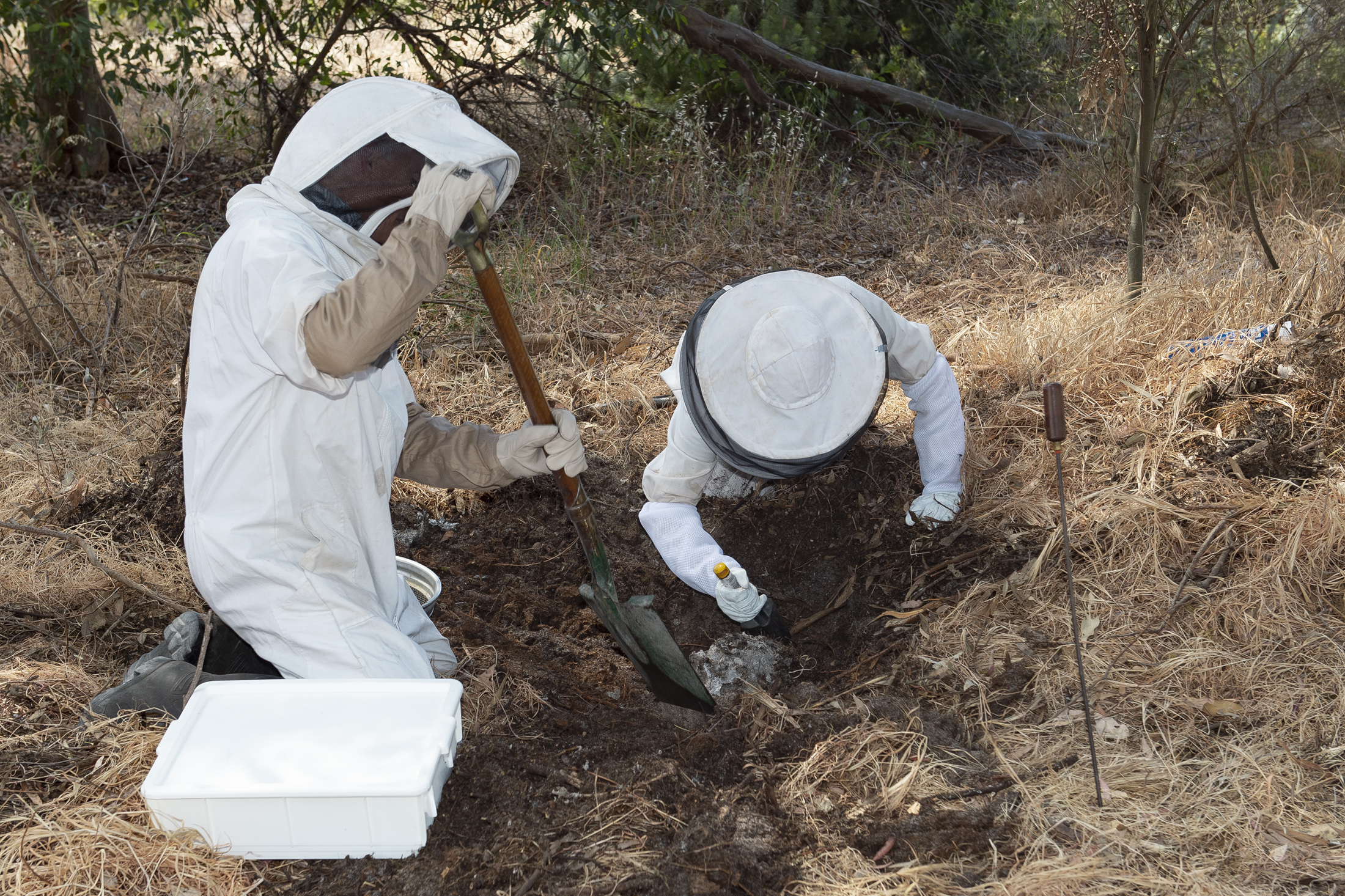
Early detection of European wasp is important to prevent the establishment and spread of nests, and the Adopt-a-trap program is a key part of annual European wasp surveillance.
The department intensively traps the highest risk areas of the state, but the Adopt-a-trap program can extend surveillance beyond these areas and into the regions to enhance community surveillance.
The trapping method used in the Adopt-a-trap program is very successful in catching European wasps. They address the wasps’ sense of smell and foraging habits to find food. Trapped wasps are useful in alerting us to the presence of a nearby nest —usually within 200 metres from the trap. Trapped wasps help us track down and destroy the nest.
Community members, businesses in industrial areas, and local governments are invited to Adopt-a-trap to monitor European wasps during the active wasp season, from December to May.
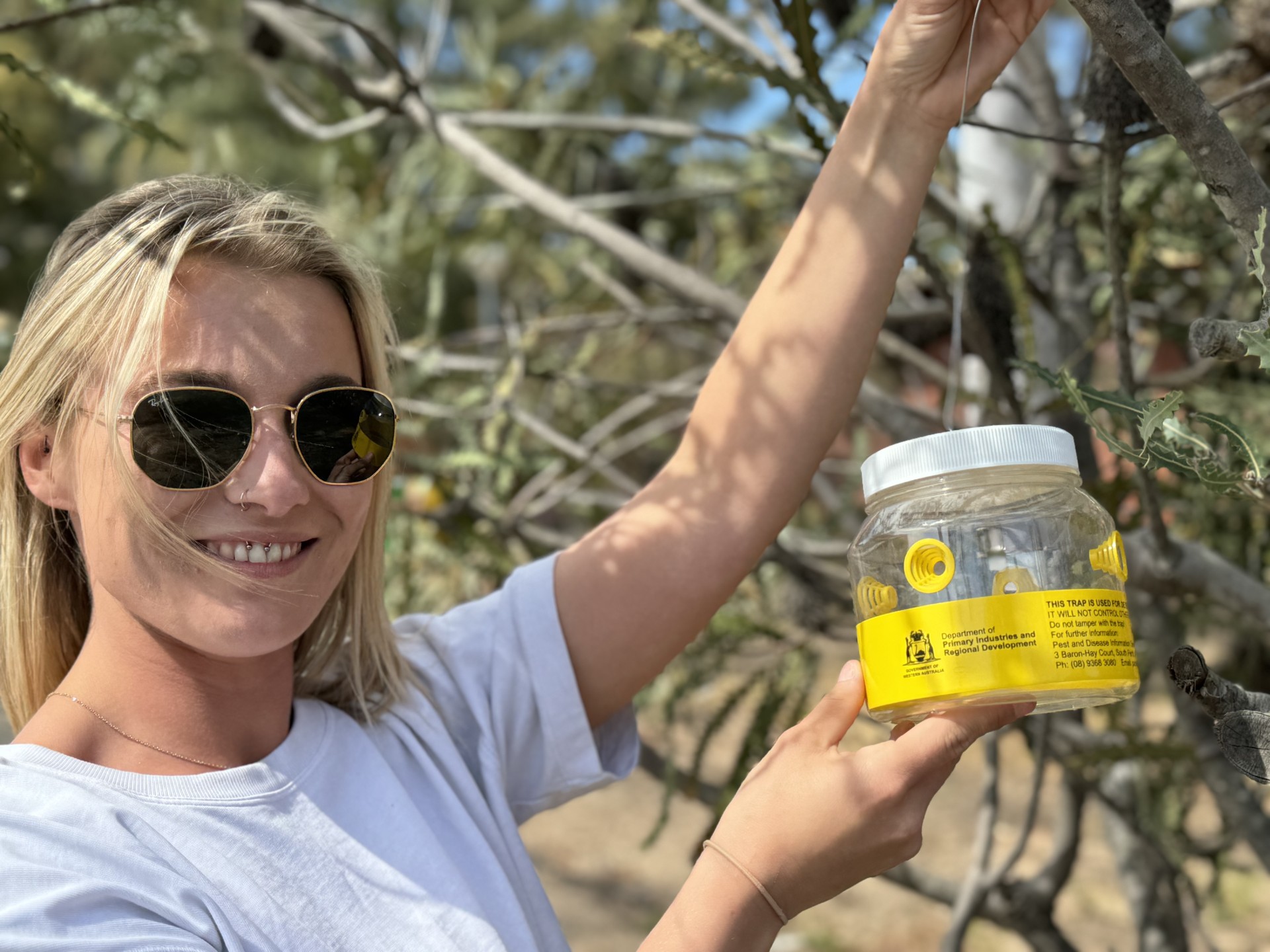
When the weather starts to heat up, it’s time to hang the trap in a backyard tree with an ice cube-sized piece of fresh fish, inspect regularly, and change the fish lure weekly or fortnightly.
Adopt-a-trap process
- Sign up
- If participating again, advise PaDIS you are trapping and provide your address
- Renew the lure
- Carefully check your trap
- Photograph and report all suspected European wasps and wasp remains.
Sign-up
To participate in Adopt-a-trap, sign up online at dpird.wa.gov.au or call our Pest and Disease Information Service (PaDIS) on 08 9368 3080 or email padis@dpird.wa.gov.au.
How to set a trap
Traps are more effective where alternative food sources are scarce.
|
Image |
Tips |
|
|
|
|
|
|
|
|
|
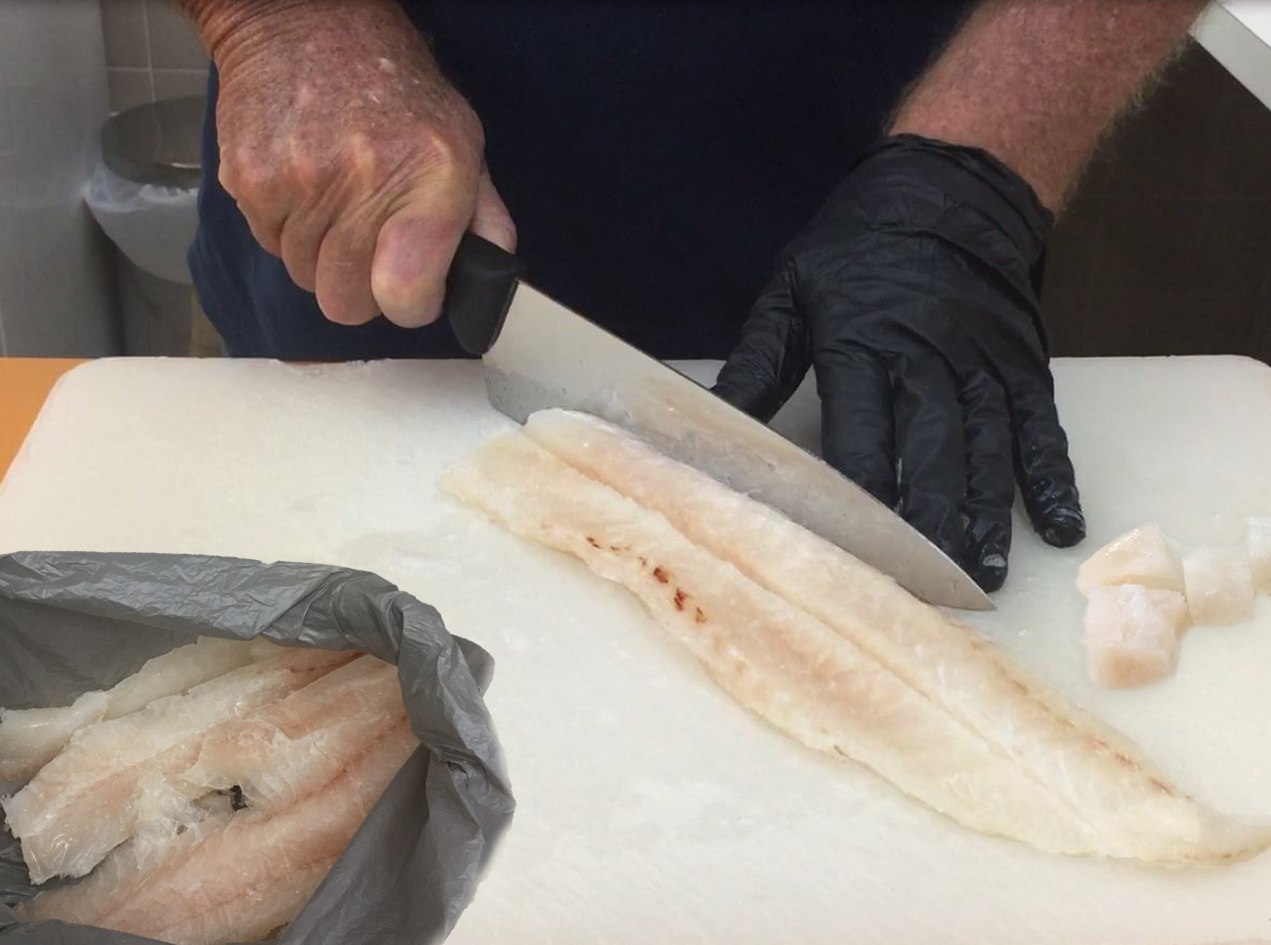
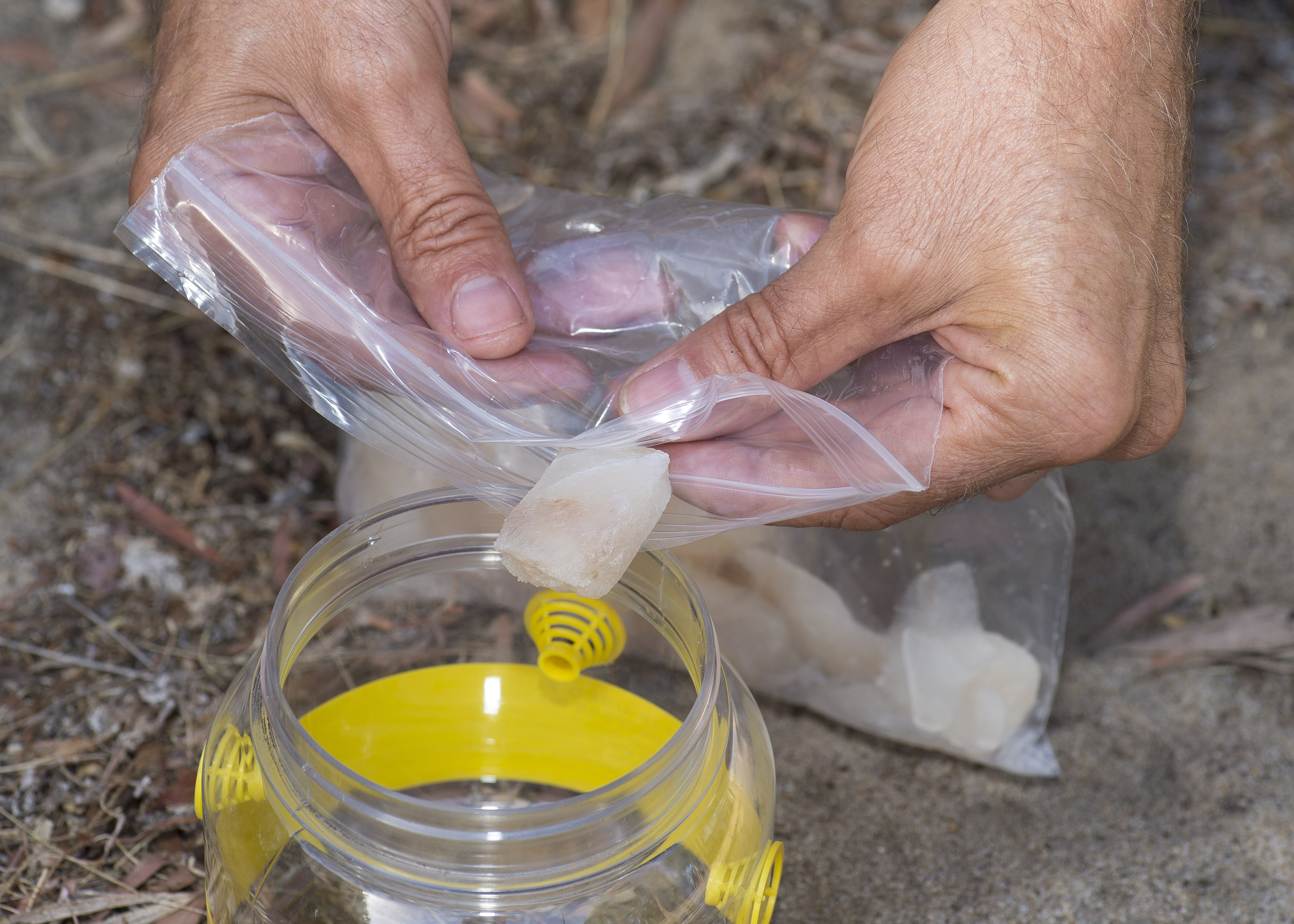
Renew the lure and check the trap
Renew the lure and check the trap every week, if possible, otherwise every two weeks, because fish lures are most effective in the first 48 hours, and dead wasps can be removed by ants.
Traps only need replacing if damaged. Contact us if you require a replacement.
Report trapped wasps
Report partial and suspected European wasps in your trap using the MyPestGuide Reporter app or online tool, available at dpird.wa.gov.au. Alternatively, call PaDIS on +61 8 9368 3080 or email padis@dpird.wa.gov.au.
Do not approach busy nests
Disturbing a nest can lead to thousands of painful wasp stings.
For information on first aid treatment of wasp stings, visit the Health Direct website at healthdirect.gov.au or call the Poisons Information Centre on 13 11 26.
Documents
-
European wasp ID cardpdf (458 KB)
-
European wasp posterpdf (1.15 MB)
-
European wasp factsheet
-
European wasp flyerpdf (3.23 MB)
-
European wasp information for local government